

Fraud & Forensics
Financial fraud and cyber-enabled scams are becoming increasingly sophisticated, often leaving victims uncertain about what happened and whether recovery is possible. At D.S Legal, our Fraud & Forensics service is designed to investigate suspicious financial activity, uncover the mechanisms behind fraudulent schemes, and support the recovery of misappropriated assets.
Our team combines digital forensic analysis, financial investigation, and asset-tracing expertise to review fraudulent transactions, identify responsible individuals or entities, and build a structured case that may support asset recovery efforts or potential legal action.
What We Do
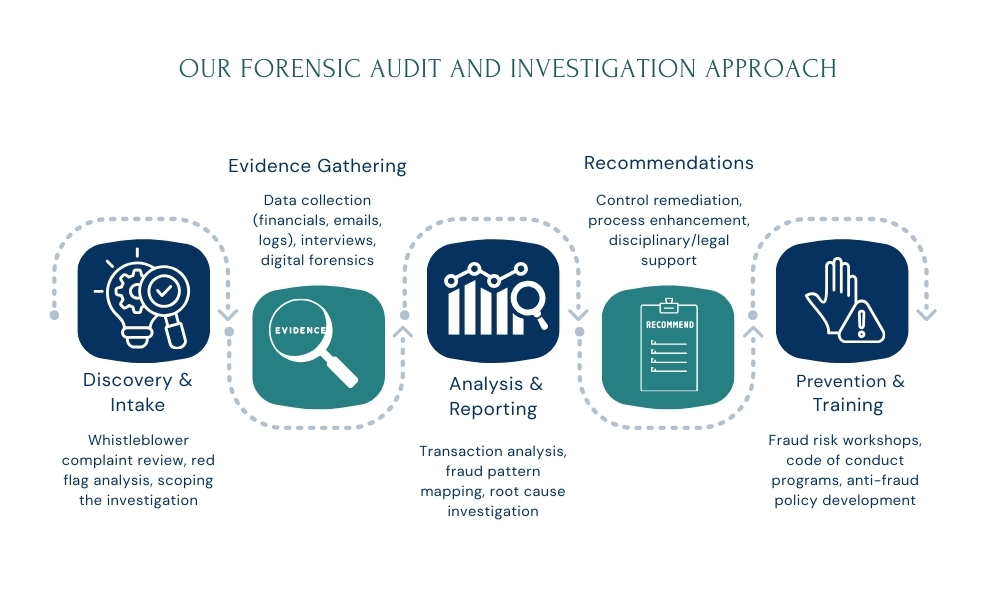
We conduct in-depth investigations into suspected fraud cases involving online investment scams, cryptocurrency schemes, unauthorized financial transfers, and deceptive financial platforms. Our investigators analyze available financial and digital evidence to determine how the fraud occurred, trace the movement of funds, and identify the individuals or organizations potentially responsible for the activity.
- Unusual or suspicious transaction patterns
- The timing and sequence of financial transfers
- Communications between victims and suspected fraud actors
- The use of digital platforms, wallets, or financial intermediaries
- Indicators of deceptive or misleading financial representations
- The possible responsibility of individuals, platforms, or entities involved
D.S Legal also conducts structured forensic reviews designed to bring clarity to complex fraud cases. During these investigations, participants and stakeholders may contribute relevant information, documentation, and observations in a structured format that supports a focused analysis of the case. This process helps ensure that investigations remain organized and evidence-driven rather than scattered or influenced by conflicting assumptions.
In many fraud cases, victims and stakeholders may have different interpretations of what occurred. Our approach addresses this challenge by documenting available information, identifying inconsistencies, and organizing all contributions into a clear investigative framework. The result is a comprehensive report that outlines the findings of the forensic investigation, explains how the fraudulent activity may have occurred, and provides structured insights that can support recovery strategies or further legal proceedings.